




Berliner Dom Reveals New Facets of Its Historic Heritage
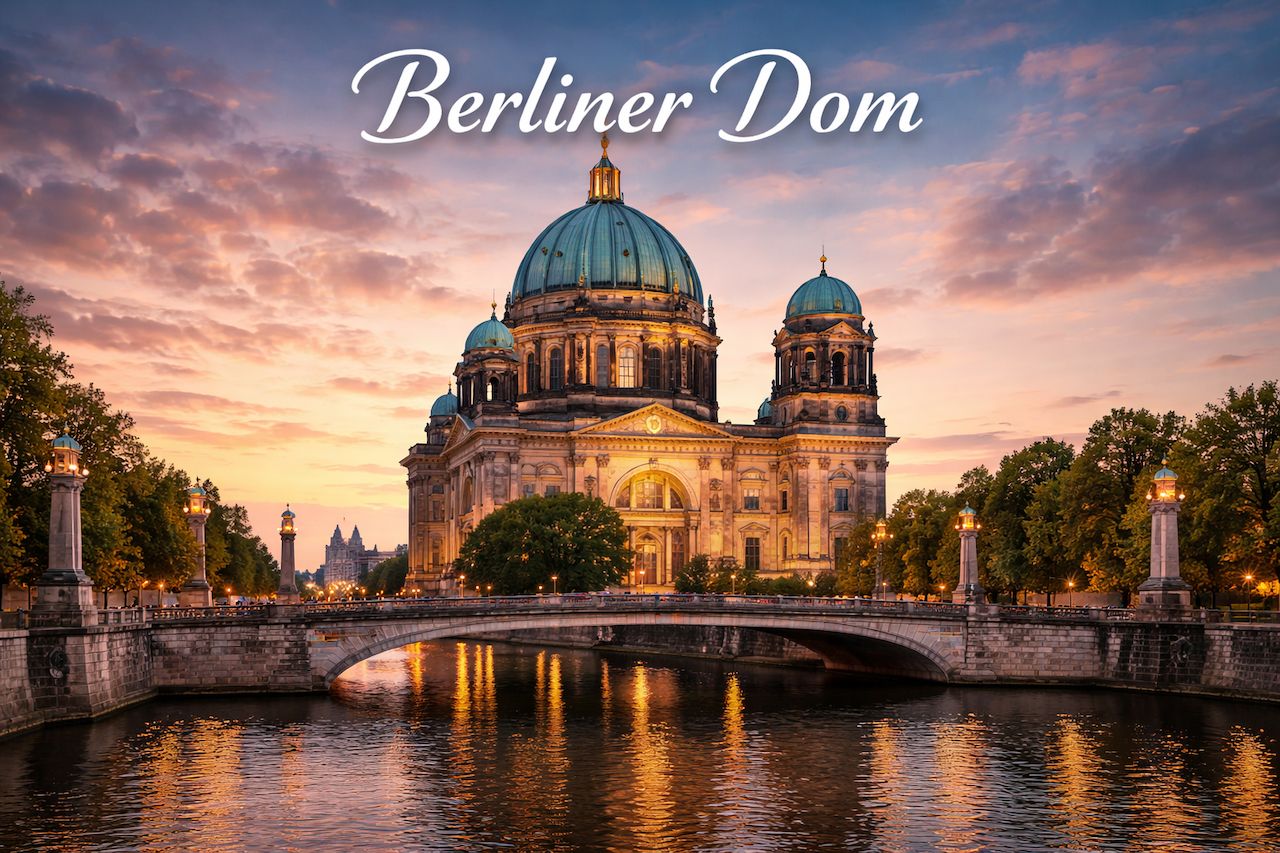
The Berlin Cathedral, known as the Berliner Dom, is one of the most impressive and recognizable landmarks of the German capital. Its location on Museum Island in the heart of Berlin highlights its significance.
The cathedral was constructed between 1894 and 1905 by order of Kaiser Wilhelm II, based on the design of Julius Karl Rashdorf. It was conceived as the principal church of the Prussian Protestants and the court church of the ruling Hohenzollern dynasty. The building reflected the confessional tensions of the era between Protestantism and Catholicism.
The Berliner Dom is the largest Protestant church in Germany and is considered a prominent example of Neo-Baroque architecture, a historicist style of the late nineteenth and early twentieth centuries. It is regarded as one of the most distinctive church buildings in Europe.
The monumental structure, built from Silesian granite, is crowned by a dome 70 meters high and 33 meters in diameter. It dominates the cityscape and attracts both residents and visitors. The main entrance is designed as an arch framed by massive columns. Bronze statues of the Apostles and Evangelists stand within the structure, and above the entrance a detailed fresco depicts the Savior.
The cathedral is known for its remarkable acoustics. At the time of its inauguration in 1905, the largest pipe organ in Germany was installed here, comprising 7,269 pipes and 113 registers. The instrument remains one of the most significant preserved examples of late German Romantic organ building with pneumatic action. It was created by Wilhelm Sauer from Frankfurt an der Oder. Over time, the cathedral also became a venue for high-level concerts, including organ performances.
Another notable feature is the crypt beneath the main hall. It houses the burial site of the Brandenburg-Prussian Hohenzollern dynasty, whose members served as Electors of Brandenburg, Kings of Prussia and German Emperors.
Among those interred are the Great Elector and the first King of Prussia, Frederick I, along with his wife Sophie Charlotte of Hanover. After six years of restoration, the Hohenzollern crypt is reopening to visitors. It contains 91 preserved sarcophagi. The oldest date back to the sixteenth century, while the most recent are from the early twentieth century.
A visit to the Berliner Dom offers an opportunity to experience historical continuity and gain insight into significant epochs. The cathedral continues to preserve its historical legacy.
IMPORTANT
On 28 February, the Berliner Dom will host an open house day dedicated to the ceremonial reopening of the restored Hohenzollern pantheon. Admission is free. Opening hours are from 10.00 a.m. to 6.00 p.m., with last entry at 5.00 p.m.
Address: Berliner Dom, Am Lustgarten, 10178 Berlin
Tags: Berliner Dom Museum Island Berlin , Berliner Dom Hohenzollern crypt , Hohenzollern pantheon Berlin reopening , Berliner Dom open house Berlin , Berliner Dom restoration 2026 , Berliner Dom history Berlin , Museum Island Berlin landmark , Berliner Dom dome 70 meters , Berliner Dom neo baroque architecture , Hohenzollern dynasty Berlin history , Berliner Dom crypt Berlin visit , Berliner Dom concerts Berlin , Sauer organ Berliner Dom , Berliner Dom Am Lustgarten Berlin , Berliner Dom visitor information Berlin , Berliner Dom crypt reopening event , Berliner Dom cultural event Berlin , Berliner Dom sightseeing Berlin Mitte , Berliner Dom organ concerts Berlin , Berliner Dom historical tombs Berlin , Berliner Dom Prussian history Berlin , Kaiser Wilhelm II Berliner Dom , Julius Karl Rashdorf Berlin architect , Berliner Dom architectural monument Berlin , Berliner Dom tourism Berlin 2026 , Berliner Dom guided tour Berlin , Berliner Dom exhibition crypt Berlin , Berliner Dom construction history Berlin , Berliner Dom church architecture Europe , Berliner Dom pantheon reopening 2026 , Berliner Dom February event Berlin , Berliner Dom free admission day , Berliner Dom Hohenzollern sarcophagi Berlin , Berliner Dom heritage site Berlin , Berliner Dom cultural landmark Berlin , Berliner Dom organ Wilhelm Sauer Berlin , Berliner Dom visitors Berlin 2026 , Berliner Dom Museum Island attraction
Categories: Latest
