


Another Hazard Warning
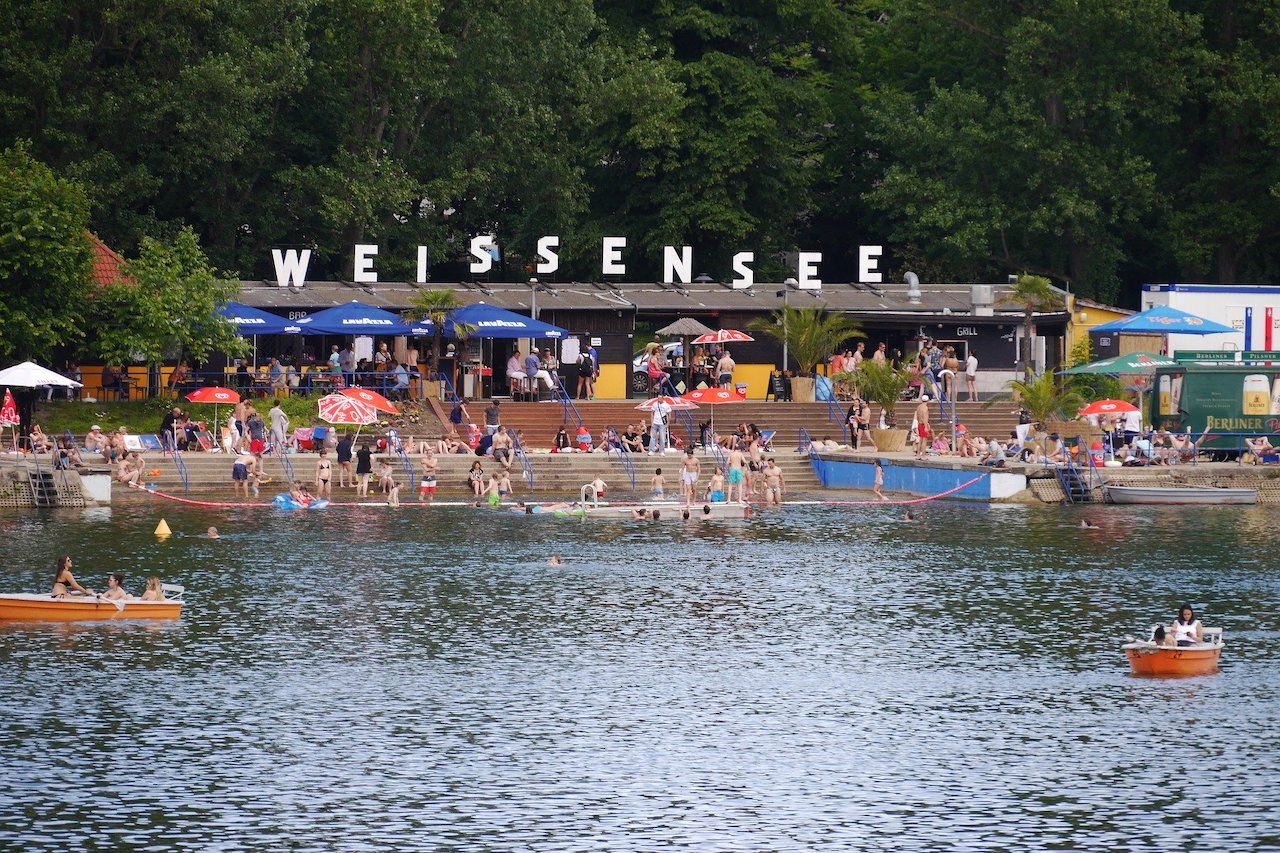
As is known, the federal states of Berlin and Brandenburg together have around 3,000 lakes, each with a water surface of one hectare or more. This makes them leaders in terms of quantity across Germany. The bodies of water referred to by Berlin residents as “lakes” are often river inlets where the current is barely noticeable. Due to the extremely slow movement of the water, the boundary between a river and a lake becomes almost indistinguishable.
All of these bodies of water differ in size, shape, depth, water density and salinity, as well as in their location, circulation patterns and the intensity of underground currents. Their functional purposes are also highly diverse. Some serve as elements of landscape design, while others are used for water sports, fishing, beach recreation or irrigation.
With the onset of the winter season and temperatures dropping below freezing, an external ice cover usually forms on bodies of water. This phenomenon was observed in Berlin in the final days of December 2025 and at the beginning of the current year on a number of lakes and waterways.
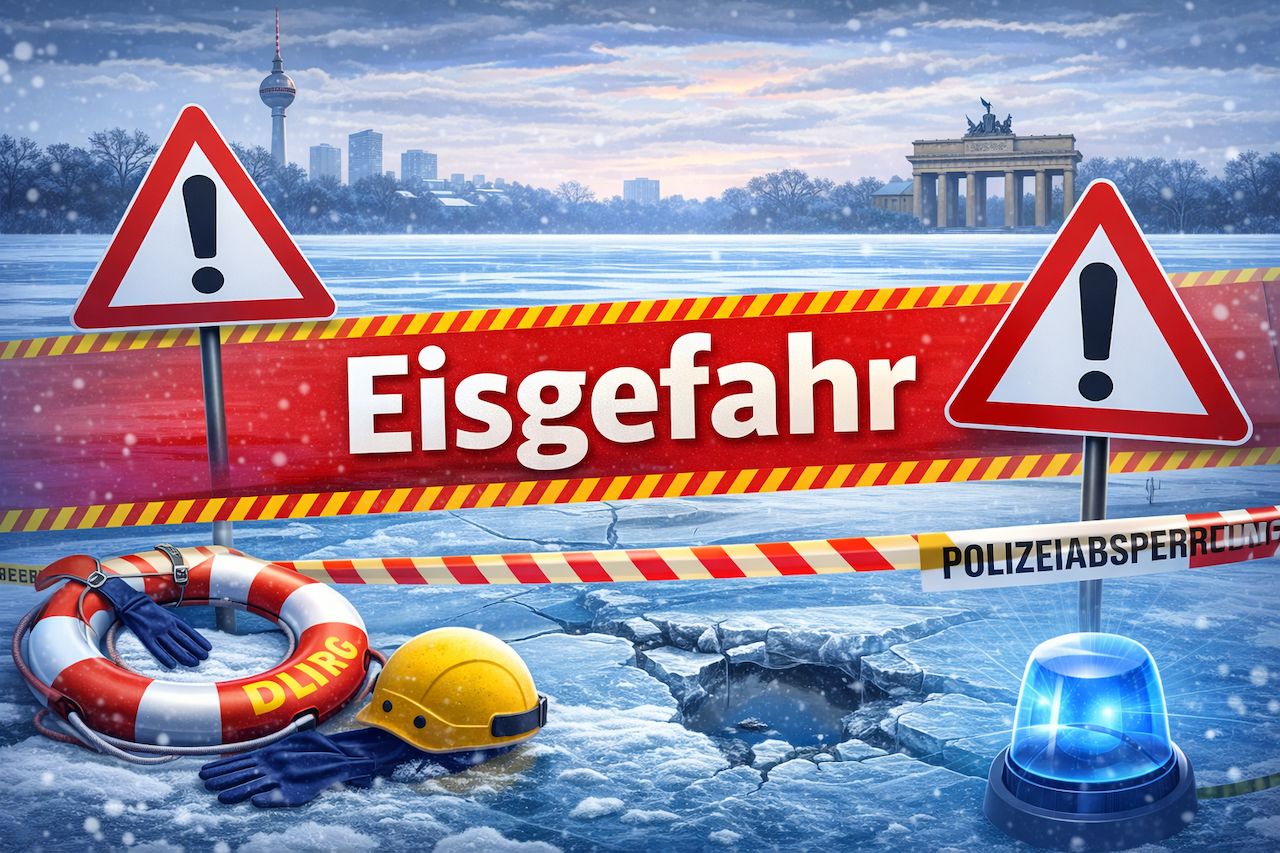
Frozen water surfaces and lagoons undoubtedly attract attention due to their striking aesthetics and create a distinctive atmosphere. However, ice that is not sufficiently strong poses a serious danger and can become a potentially deceptive “trap”. Its structure is unpredictable and involves risks when walking on it or engaging in recreational activities. Such actions may result in breaking through the ice, which can lead to hypothermia and frostbite.
For example, in the first half of January, several incidents were recorded in which people broke through the ice, including on Berlin’s largest lake, Müggelsee, and near the reinforced concrete Lohmühlenbrücke bridge along a navigable canal. In these cases, there were fortunately no tragic consequences, as those affected were able to free themselves from the deceptive “ice trap”.
According to information from the German Life Saving Association (DLRG), Berlin’s bodies of water currently do not have a stable ice cover. A stable ice layer is defined as having a thickness of 15 to 20 centimetres. However, even such thickness does not guarantee safety, as many rivers and lakes in Berlin have underground inflows where the ice can be significantly thinner in certain areas.
The strength of the ice is also influenced by other factors, such as the speed of the water current, the discharge of wastewater or shipping traffic. In addition, whirlpools can bring warmer water up from the bottom, causing the ice to remain thin. Such spots cannot be identified visually and are therefore particularly dangerous.
Berlin’s river police, along with the relevant rescue services in both federal states, are once again warning the public against stepping onto frozen or partially frozen lakes, rivers and canals.
Tags: public safety , rescue services , walking on ice , natural waters , winter safety , ice cover , unstable ice , winter alert , Berlin news , ice danger , rescue service warning , Berlin lakes , Brandenburg lakes , rivers in Berlin , canals in Berlin , thin ice , winter hazard , falling through ice , water bodies Berlin , water bodies Brandenburg , river police , DLRG , Müggelsee , winter season , risk to life , cold weather , hypothermia , frostbite , ice safety warning , Brandenburg news
Categories: Latest