


Skilled professionals as the key to success
Qualified professionals determine a great deal – this phrase, which has become almost proverbial, has not lost its relevance even today. In the modern world, where technology develops rapidly and competition in the labour market becomes increasingly intense, human capital is coming to the forefront.
Companies and businesses that understand the value of their employees and invest in their training, career development and the creation of favourable working conditions gain a clear competitive advantage. This is the firm opinion of HR analysts – specialists who study and evaluate information about various segments of the labour market – as well as recruitment experts.
Where does this strong conviction come from? The answer is obvious: the ability of qualified specialists to approach tasks creatively, adapt to new challenges and propose innovative ideas acts as a driving force of progress. Their deep knowledge, practical experience and constant desire for self-improvement allow companies and organisations to remain stable even in the most difficult and sometimes crisis situations.
The conclusion is simple: today qualified professionals are essential and highly demanded for the economic development of countries, societies and organisations. This is connected with changes in the professional sphere, technological progress and the globalisation of the labour market.
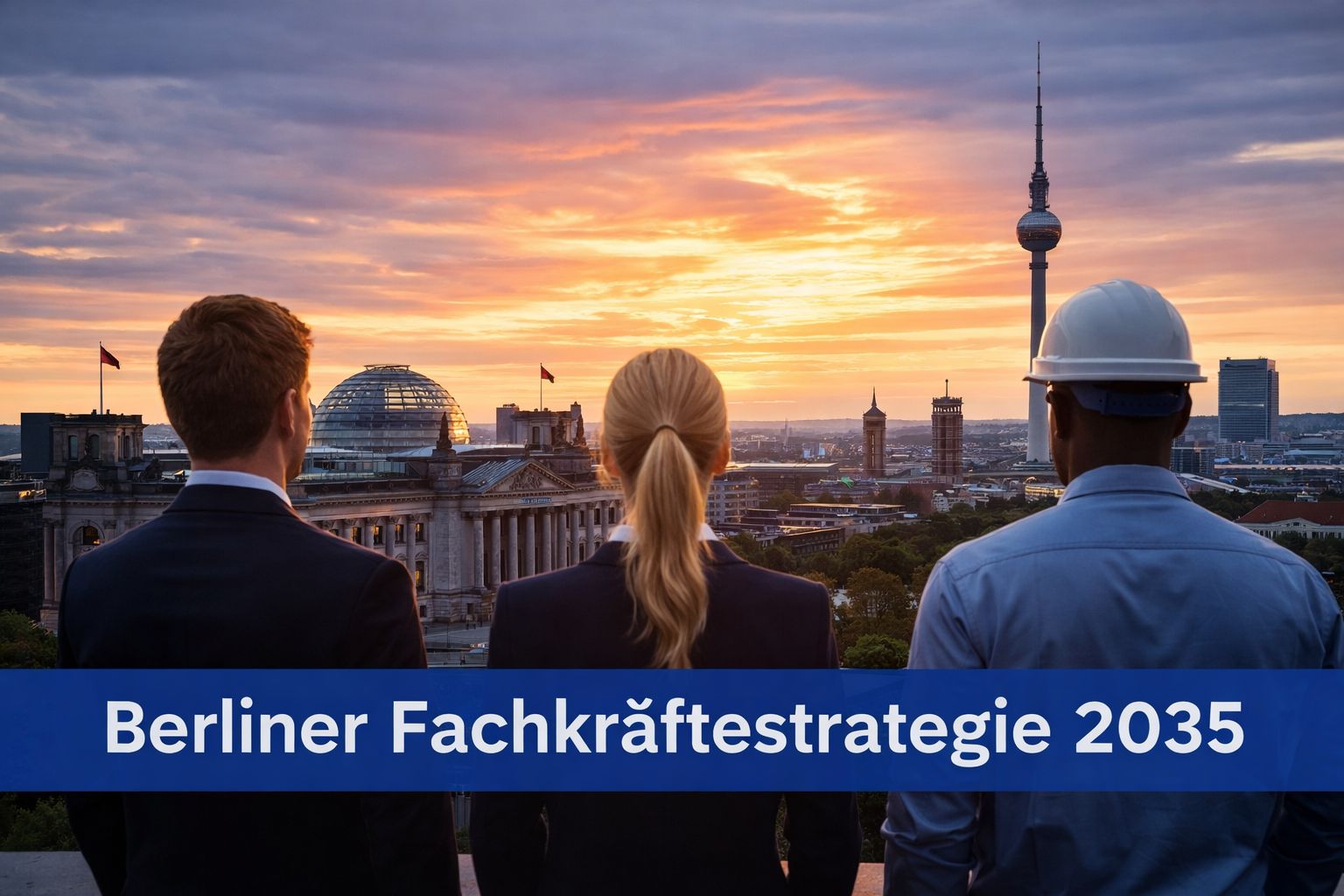
The Senate of Berlin has reviewed and approved the Berlin Skilled Labour Strategy 2035 (Berliner Fachkräftestrategie 2035). It was presented by the Senator for Labour, Social Affairs, Equality, Integration, Diversity and Anti-Discrimination, Cansel Kızıltepe.
Berlin, as an important economic hub and a powerful centre of employment activity, faces a serious challenge: by 2035 approximately 560,000 new jobs will need to be created in the German capital. This demand is driven by demographic changes, the acceleration of digitalisation and the transformation of the economic structure. Such a large-scale task requires a comprehensive strategy to provide the city with the necessary specialists, the consolidation of efforts of all stakeholders and a deep understanding of Berlin’s competitive advantages.
The Berlin Skilled Labour Strategy 2035 focuses on attracting qualified professionals. Its most important components include providing key sectors of the economy with the necessary specialists, supporting citizens in obtaining qualifications and improving their educational level, as well as creating favourable conditions for the professional development of young people. In addition, an important task is to make more effective use of existing but not yet fully realised labour potential and to expand access to quality jobs for wider groups of the population.
The strategy reflects general conditions that significantly affect both highly qualified employees and businesses. Therefore, the Senate intends to implement joint interdepartmental measures focusing on the immigration of highly qualified specialists, vocational and academic education, professional training programmes, the potential of digitalisation and the support of innovation activities. This process is being implemented for the first time by the executive branch of the capital.
In this context it is important to note that the Berlin Skilled Labour Strategy 2035 was developed with the participation of all Senate departments and administrations, as well as in cooperation with economic and social partners and other stakeholders. In this way Berlin is creating a foundation for more coordinated and effective action in the field of skilled labour supply in the future.
As a first practical step, the Senate Department for Labour, Social Affairs, Equality, Integration, Diversity and Anti-Discrimination plans to provide 150 apartments to trainees during the summer, since this category of workers is particularly in need of affordable housing.
In addition, the refugee reception centre on Potsdamer Straße will be transformed into a modern, international and multilingual digital advisory centre.
Senator Cansel Kızıltepe formulated the main idea clearly:
“Berlin is already an attractive place to work and live for specialists from Germany and from other countries. With the Berlin Skilled Labour Strategy 2035 we will further develop these strengths and ensure that Berlin remains economically strong, innovative and attractive to live in in the future. Without skilled workers there is no prosperity.”
Additional information: Berliner Fachkräftestrategie 2035
Tags: Berlin skilled labour strategy 2035 , Berlin workforce strategy plan , skilled professionals Berlin economy , labour market Berlin development , Germany labour policy strategy , jobs in Berlin future economy , Berlin workforce development , attracting skilled workers Berlin , education and qualifications Berlin , skilled labour demand Germany , labour market Germany future , economic development Berlin workforce , migration of skilled workers Germany , vocational education Berlin labour market , training and employment Germany , employment policy Berlin workforce , skilled professionals for Germany economy , digitalisation labour market Germany , innovation economy Berlin workforce , employment strategy Berlin government , jobs Germany economic development , labour market Europe workforce , economic news Berlin workforce , economic news Germany labour market , social policy Berlin employment , integration of skilled workers Germany , labour market development Berlin news , workforce programme Berlin government , Berlin economy workforce strategy , Germany economy skilled workers demand , news Berlin labour market , news Germany labour market , news Berlin in English , news Germany in English
Categories: Latest